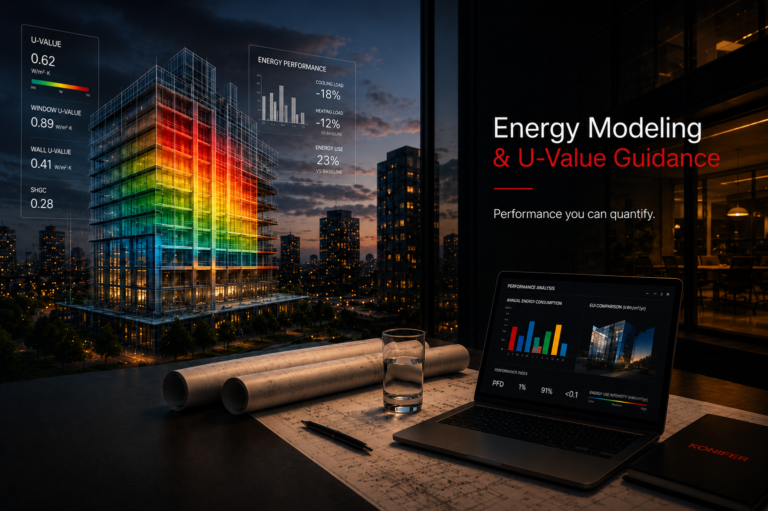
Energy performance is not a checkbox. It is a measurable outcome that directly impacts operating cost, occupant comfort, and long-term asset value.
At Konifer, we don’t treat energy modeling as a late-stage compliance exercise. We integrate it early in the pre-design phase—where real performance gains are still achievable.
What We Do
We support architects, consultants, and developers with project-specific energy performance analysis, including:
Early-stage façade system comparisons
U-value optimization based on project targets
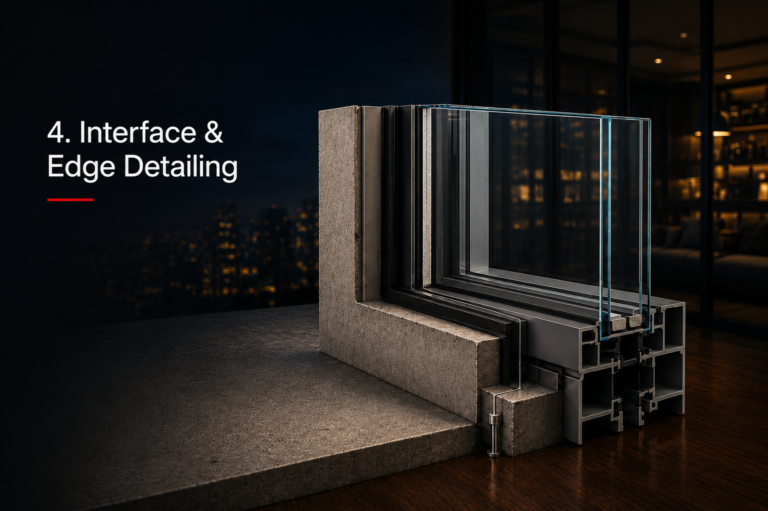
Thermal bridge assessment at critical interfaces
Glass-to-frame ratio analysis
System-level performance modeling (not just component data)
The goal is simple: Guide the project toward the most efficient system before design is locked.
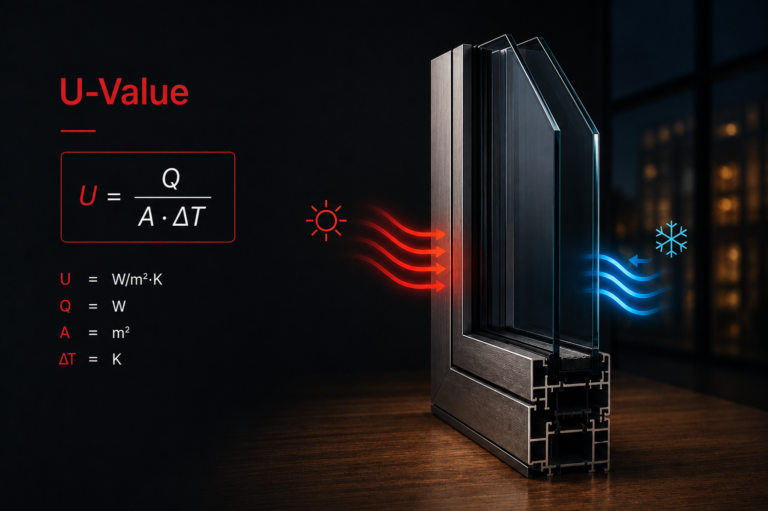
Understanding U-Value (Without the Marketing
Fluff)
Where:
U = Thermal transmittance (W/m?.K)
Q = Heat transfer rate
A = Area of assembly
AT = Temperature difference
System-level performance modeling (not just component data)
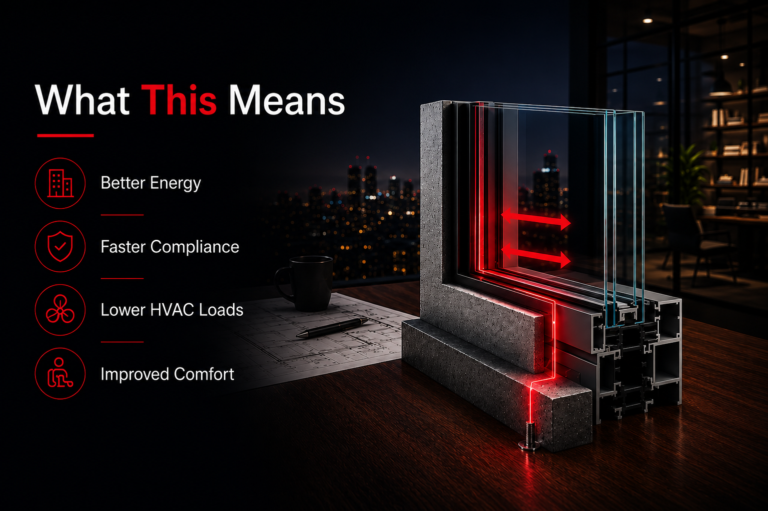
Lower U-values mean better insulation performance.
But here’s the part most suppliers conveniently ignore:
A “good” glass U-value means nothing if the frame and interfaces fail.
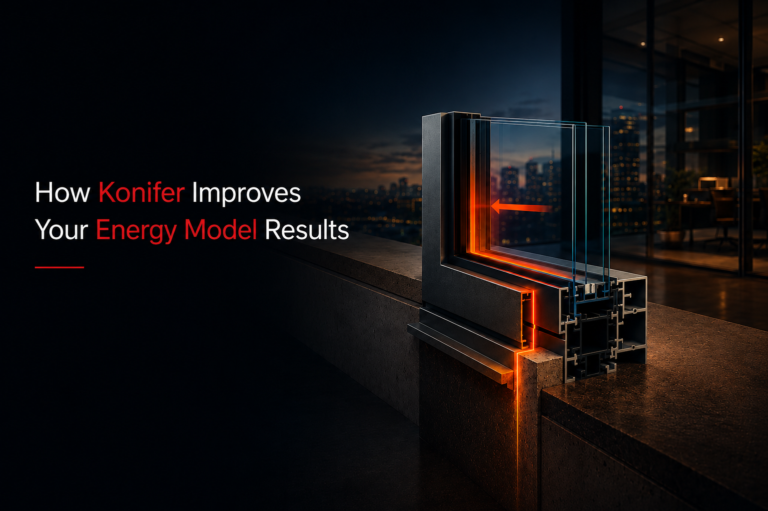
Why Konifer Systems Perform Better in Energy Models
Most energy models fail in real life because they rely on component-based assumptions.
Konifer takes a system-based approach.
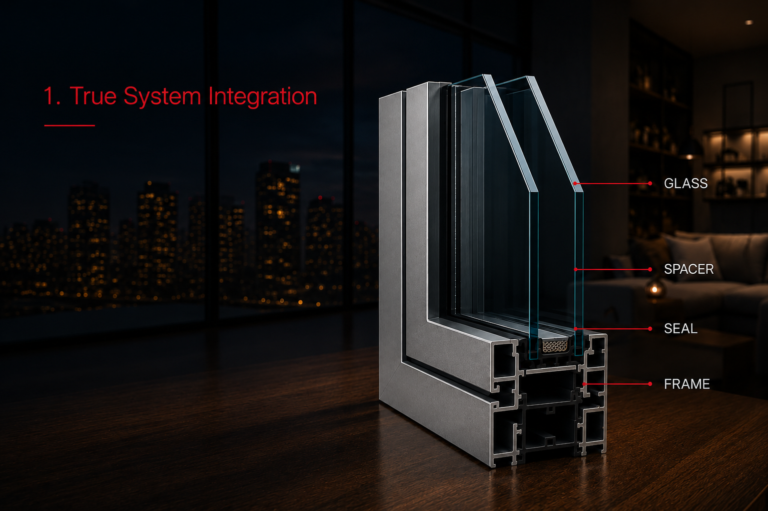
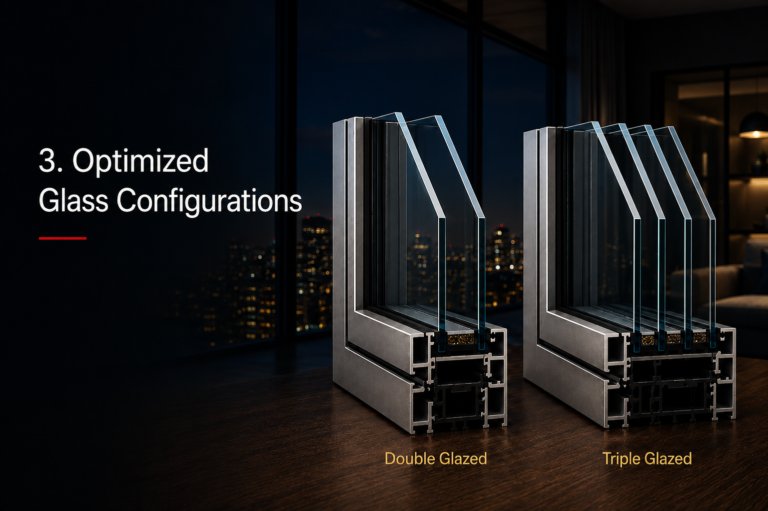
1. True System Integration
Frame + glass + spacer + seal = one engineered system
Eliminates mismatch between modeled vs actual performance
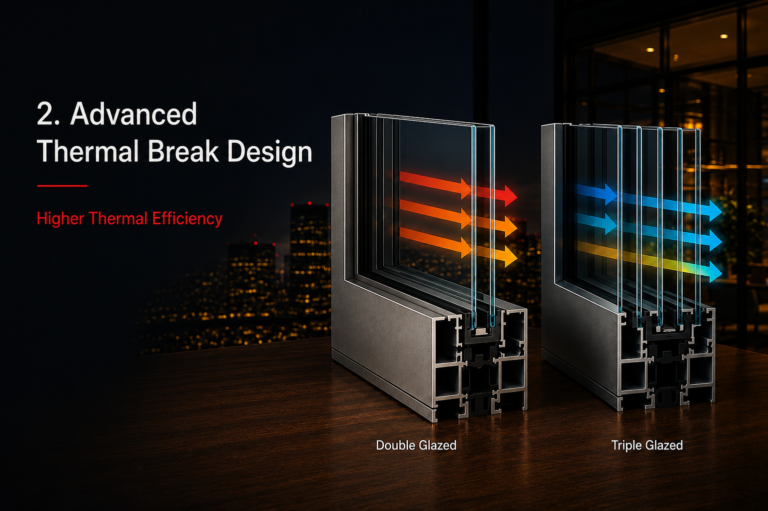
2. Advanced Thermal Break Design
Multi-chamber thermal barriers in aluminum systems